

Reliable, trustworthy, steadfast — traits we want in a firearm that we may reasonably bet our life on. In fact, firearm reliability should be a top concern when deciding on a defensive firearm. Reliable function is defined as a high propensity to fire with each pull of the trigger and to continue to fire normally. The firearm should also be reliable in stopping the threat, which is a function of power and practical accuracy.
Accuracy is defined as repeatability with the firearm delivering consistent accuracy, to the level of accuracy the firearm is capable of. The trigger action is consistent, and the average grouping, point of aim, and point of impact relationship are calculable. Man’s inhumanity and hostility toward his fellow man has given me a considerable stake in proving reliability in firearms.

Dangerous individuals have made a terrible impression on my mind and body. As an example, as a young child, I was impressed by a fellow who came into Dad’s business. This man had a knife scar across his cheek leading into the corner of his mouth. It was a disfigurement that gave the man a permanent snarl.
When the man left the shop, I told Dad, ‘That man scared me.’ Dad replied, ‘Don’t be afraid of him. Be afraid of the man that did that to him.’ Less than 12 years later, I picked up a scar of my own while actively chasing down and imprisoning dangerous men. Some were pitiful, others were warped, but all were dangerous men.
Semi-Auto Rifles
There are guns that other writers and the average citizen trust, but I have no faith in. Some are too cheap, some unproven, some proven unreliable. I suppose we went to a different church.
It isn’t debatable that an inconstant firearm may cost you your life. In my young adulthood, the AR-15 was not held in the high regard it is today. The M16’s story could fill volumes. The M16 was forced-fed ammunition that was different than what it was designed to handle.
The result was not only poor function but a different cycle rate. The gun quickly got dirty and did not cycle properly. It was only after the correction of this error that the rifle again became reliable firearm Stoner designed.

Much the same situation exists today with folks adding aftermarket parts of dubious quality that often are neither needed nor beneficial. The AR is a machine of irreducible complexity. If a single part breaks, the rifle is often out of business.
Modern AR rifles are superior in fit and finish. The durable coatings we now enjoy add a degree of lubricity to the rifle’s moving parts. With good quality ammunition and magazines, there is nothing more reliable than a quality AR-15. That begins with Springfield, Colt, or Ruger in my opinion.
I have never experienced an unqualified malfunction with my AR-15 rifles. A cheap trigger set came apart in a build and was replaced. Parts guns are problematic. A quality AR is not. I avoid cheap magazines and dirty ammunition. I don’t accept a dodgy firearm, and neither should you.
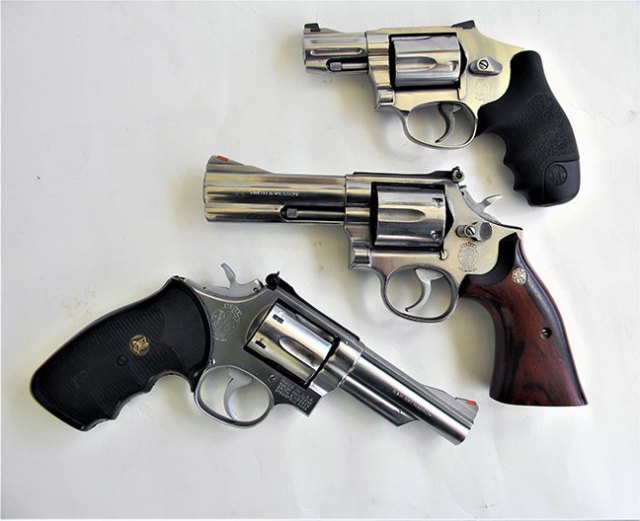
I have owned a much smaller number of AK types than the AR. I have not enjoyed the vaunted reliability promised with the AK, save for a few good quality examples. Many are made cheaply and were simply made to sell. They tie up and fail from time to time.
AK reliability depends on quality parts and ammunition choice. When you cheapen a machine, and the Russian AK-47 was a very reliable rifle, you make it more likely to fail. While many AK clones have the look of the AK in appearance, they do not resemble the original in performance. Many of the malfunctions are traced to problems in loading and unloading the rifle. A good quality rifle is one type, the other guns are for recreational use only.
Shotguns
Many regard semi-automatic shotguns as less reliable than pump-action shotguns. This hasn’t been true since the introduction of the Remington 1100 and later the Benelli M4. The Remington 1100 is among the most reliable shotguns ever made.

The narrow receiver and near perfect balance lead to good hits in the field. The placement of the hands with one in front of the other on the forend and stock lead to optimum coordination and fast, sure handling. The piston assembly encompasses the magazine, and in some ways resembles the M1 Garand in function.
Remington later introduced the even more reliable 11-87. This shotgun with its self-metering pressure valve is reliable with a wider range of shells than most any shotgun. Then the Benelli M4 earned an enviable reputation for reliability.
When we consider the fast handling of these shotguns and advantages such as a 1 5/8-inch drop at the comb, we have a reliable shotgun that handles quickly and provides hits like a real shotgun — by feel. The difficult to obtain Remington Versa Max Tactical is more of the same.
Several modern shooters purchase AR and AK-styled self-loading shotguns. They no longer have a natural point. They must be aimed like a rifle. Reliability is not impressive in my experience. Many of the problems stem from operator error.
Pump-action shotguns are touted as more reliable than semi-automatic shotguns. When you consider the wide range of shells that may be stuffed into the pump-action shotgun and manually operated, then this is correct. However, the pump-action suffers from operator error.

If not cycled vigorously, a short cycle may occur. This happens when the bolt isn’t racked all the way to the rear. During a short cycle, the bolt is brought forward and catches a shell before it is aligned with the chamber. The result is a nasty jam that requires some exertion to clear. Remington modified the shell carrier of the Remington 870 with a slot in the carrier body that allows a blade to be inserted to help clear a short-cycled shell. However, it is better to operate the pump-action properly and to avoid malfunction clearance.
Manually-Operated Rifles
Manually-operated rifles include single-shot, lever-action, and bolt-actions. The lever-action is regarded as a model of reliability. If the cartridge elevator becomes worn, it is common for a cartridge to tie the action up. The cartridge will be lodged in the feedway between the magazine and bolt. This is difficult to clear. The lever-action rifle must be operated by running the lever forward, not down.
Recently, I was working with an 1886 clone that would not feed from the magazine when the lever was worked slowly. A sharp movement was always reliable. The lever-action is a reliable type, but not foolproof.

While a lever gun is reliable, a Springfield M1A is probably more reliable in sustained fire and all conditions. The most reliable rifle action of all time is the Mauser controlled-feed bolt-action. With a non-rotating extractor collared to the machined bolt, a Mauser action (of the original design) controls the cartridge through every step of the feed and extraction process. The Ruger M77 is among the best choices for all-around reliability today.
Handguns
Semi-automatic pistols are less reliable across the board than semi-automatic rifles in my operation. One reason is that rifles are grasped and fired in a three-point lockup when in use. A pistol may be fired with a weak wrist and improper hold. Errors in a shooter’s form may certainly result in a malfunction, and far too many will later blame the gun.
Pistols need cleaning and lubrication. My most trusted firearms are quality 1911 handguns, CZ 75 pistols, and the Browning Hi-Power. Good magazines, good lubrication, and good quality ammunition are essential — even implicit — in the recipe for good function.
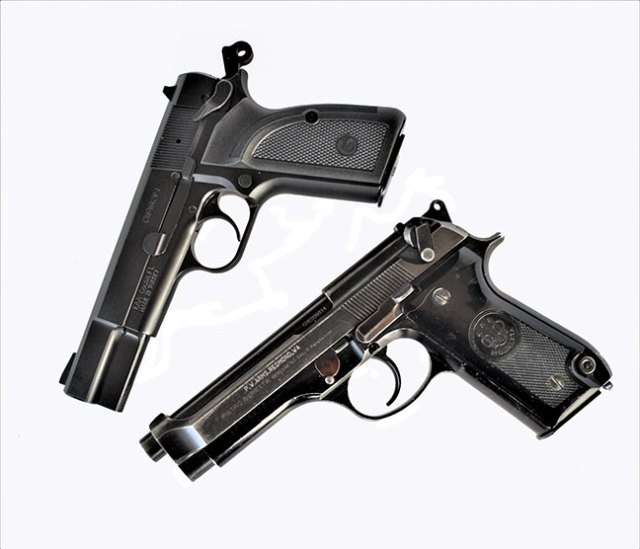
Among the most proven pistols in the world are the SIG P-series, including the P226. There are no pistols as proven in institutional testing as the P226. The Beretta 92 enjoys a similar service history. The Glock is a baseline for reliability proven in many tests.
While I prefer the 1911 handgun, I would never trust my life to a cheap 1911. There have been too many concessions in the race to the bottom concerning price with cheap parts and finish. Kimber, Ruger, Springfield, and Dan Wesson are good starting points. While I prefer the speed to an accurate first shot of a good 1911, a cheap 1911 is inferior to the Glock in reliability. This isn’t a good trade-off.
I cannot stress enough the importance of reliability. Handling, natural heft, a good point, and handfit — not to mention accuracy and power — are important, but reliability has the most impact on your survival. Therefore, among the most useful handguns for defense is a revolver.

Even inexpensive revolvers are reliable in the usual course of things, although the action may be rough. The revolver has a high likelihood of firing with every pull of the trigger. If a cartridge fails to fire, another pull of the trigger brings a fresh cartridge up and under the hammer. The revolver will function — even if jammed into an adversary’s body and fired repeatedly. The revolver barrel may be braced on a door jamb or wall and the revolver may be fired accurately. When reliability is the overwhelming concern, manually-operated firearms may be at the top of the list.
In the end, it is your life and the lives of your loved ones that hang in the balance of your firearm’s reliability, so pick wisely. Which firearms do you trust to have the reliability necessary for personal and home defense? Share your answers in the Comment section.
Editor’s note: This post was originally published in June of 2022. It has been completely revamped and updated for accuracy and clarity.

The author tests a Black Aces shotgun by holding it below chest level. Function is good. 
The Mauser 98 (This is the CZ version) is among the most reliable firearms in the world. 
This revolver is more than 100 years old. Yet, the author completely trusts this solid S&W 1917 revolver. Not only are manually-operated firearms reliable, they are often affordable — a win-win situation. Long-term reliability is a strong suit of the Hi-Power and Beretta 92 type pistols. Any rifle serving in two world wars, and many other fights large and small, must be given respect. 
This is a highly elevated Remington 870 from Wilson Combat. 
This original Lee Enfield Jungle Carbine is completely reliable and holds 10 rounds of .303 British ammunition. You could do a lot worse for an emergency rifle. Note the short lever throw of this Henry rifle in .45 Colt. Operate the action vigorously as intended. 
Henry’s .30-30 rifle is a model of fit, finish, reliability, and accuracy. 
Remington’s Versa Max tactical is in most ways in a class of its own. 
The author testing the Black Aces shotgun, basically a Benelli clone with Fiocchi buckshot. This is the most modern Remington 870 follower. It is designed to limit the effect of short cycling. 
Mossberg’s battle proven 590 sets the standard for combat shotguns. 
The Glock types including the Shadow Systems have set a high bar for reliability. These magnum revolvers are very reliable and more accurate than most shooters can hold. 
While revolvers demand cleaning and the occasional spring replacement they are very reliable. Shot-to-shot accuracy and handling are constants that must be demanded from a personal defense handgun. 
The Ruger SR1911 is an uncommon blend of workmanship, fit, finish, and reliability. 
In the end, wringing the gun out on the range is real qualifier of reliability. Reputation only goes so far. 
Ammunition quality has a great effect on reliability. These loads are top notch personal defense loads in 7.62x39mm. 
This Wilson Combat AR is very, very reliable. Precision manufacture and surface coating means a great deal. 
All rifles demand maintenance, cleaning, and lubrication. Modern AR-15 and AR-10 rifles are models of reliability.
@ Colonel K: No, I have seen too many cases of dead people who used a caliber that got them killed because it could not deliver. Using a noneffective caliber for self-defense is like sending Army cooks instead of Rangers or Spec-OPs to drop in behind the lines and assault a fortified enemy position during a war. Will not end well.
@ Chris Baker: You state, “So people like Bo, Please try to be a bit more understanding of some folks situation.” I would say, please try to understand my position. I have seen cases of people who placed their trust in the guns I referred to as the LBCoDPE and died. There were times the cops told us the shooter probably would not have died if they had not drawn a weapon and shot someone who became enraged and killed them. I do not want someone to draw a weapon, shoot someone, and die because of a caliber that will not stop a perp intent on relieving someone of their possessions. Using an unreliable weapon, as in a Last Bad Choice weapon, is not a good choice. In my experience, you have a far greater chance of being hurt or killed shooting someone with an LBC weapon than if you surrender your possessions.
Jack Benny had a schtick back before I was born where a guy comes up to him, sticks a gun in his face and says, “Your money or your life.” Jack has a long pause and then says, “I’m thinking.”
People talk about what the “Experts” think about those calibers. One thing I notice about what those “Experts” think about these weapons. It is all conjecture. They do not provide examples of those calibers doing the job, just that they think they will perform. It is like the “Experts” who told us COVID would wipe out 10-15% of the US population and everyone would be safe if they took the vaccine. One time and you are good. Okay, it did not kill as many people as we thought, but you still need the vaccine again, one more time, well, a third time, and a fourth. The last I heard they were saying we need one every year. These people were wrong more than they were right. If you believed them, the number patients who died from heart disease went from the hundreds of thousands per year to almost zero in the space of a year because it was not heart disease that killed them but COVID. Their heart disease must have gone away.
“Expert” conjecture is still a wild @$$ guess and many times they are wrong, like when they say it should work, but have ZERO data to back up why they think that. The .32 does not even have the power or energy that the .38 LC did. The .38 LC got many US GIs killed because it could not do the job. There were cases of people being shot 4 or more times and they did not succumb to their wounds. I know of ZERO cases where a .32 or .380 ever met the expectation and dozens where they did not. Those are not good odds.
Look for data showing cases where those calibers did their job. I mean real numbers, in real cases, in real life where it worked, not what someone thinks should or could happen. Did it do the job? I think you will find the data is consistent with what I saw in the ER and what was related to us by dozens of LEOs over more than three decades. They are BAD choices. Try to understand that I do not want you, or anyone else, for that matter, to become a statistic on a police blotter because you or they used a Last Bad Choice of Dead People Everywhere weapon to defend yourself or your family.
“Bo’s a Fudd! Bo’s a Fudd!”
BLAM!
“Bo’s a live Fudd.”
🙂
@ Chris Baker: Apparently you are one of those people that 50 years ago, while in the Army, we referred to as a “Cherry.” They seem to know what happens when people are shooting at you and you need to return the favor, all the while believing that, either because of what their Uncle Joe told them about being back in the “Big One” in ’45, or because they saw “The Dirty Dozen” they know what it is like.
I am 73, and some 50 years ago, I was an Army medic on SAR (Search and Rescue) / Recon teams some place overseas. Several of the places we went are not on my DD214. I have been shot at too many times and I have drawn weapons to return fire. We did not play nicely with others. I had friends who were shipped back home to the States in a box. I also had friends who went home with body parts missing.
When I got out of the Army, I worked in various ERs (Sometimes two different in the same week) for more than 30 years. Then I taught nursing students and nurses as a Nurse Educator, teaching things like Advanced Cardiac Life Support, Pediatric Advanced Life Support and Critical Care Nursing. Over the course of my Army tour and ER career I saw more GSW patients than anyone I know.
That being said, my reasons for eschewing the calibers I do is because from what I have seen, those calibers are more dangerous to the shooter than to the shootee. That is not just my opinion, but that message was relayed to me from multiple police officers in several jurisdiction. I have seen multiple people who were shot with those calibers who not only survived those wounds, but they killed or maimed their shooter before they reached a stage of incapacity and were brought to us. That was why several officers referred to the lower calibers as The Last Bad Choice of Dead People Everywhere. It seemed, to them and me, that those people who carried and shot people with those calibers all ended up dead, or crippled, and in a majority of those cases that we saw in the ER, those perps survived so they could go to prison for the rest of their lives. It was cops who told us that these guns were more dangerous to the shooter than the shootee.
Now, I am not the sharpest knife in the drawer, but I am not a plastic serrated take home knife from a fast- food place. It seems to me that if one relies on a weapon for self-defense, and when calling upon that weapon one actually shoots someone, and they kill you that is a FAIL. I have seen that dozens of times with the .25, .32, (each I might add) and probably at least a dozen times with a .380. When I came back, I was one who thought those calibers might be reasonable. After working in ER for more than three decades, I was disabused of that notion. There is something about saving the life of a miscreant who killed his shooter that makes me question the efficacy of the weapon that was used to shoot him.
I do not remember a single time that any of those calibers delivered the protection that was expected on the part of the shooter.
You say, “I’m pretty sure that a .32 ACP round to the throat or forehead would stop pretty much anyone no matter what drugs they’re on or how much alcohol they’ve consumed.” Number one, shooting at another human being the first time is more stressful, not to mention more difficult than anything you have ever done. There are changes that take place in the Fight or Flight response that people who have never been there cannot begin to imagine. You have ZERO control over that. Only after you have been through a real live action drill several times does your Autonomic Nervous System realize that you have been there before can you really concentrate on what you need to do. Did I mention I was in the Army, and I have been shot at? There is nothing in today’s society that prepares people for that. There were times when I was overseas, I did not believe the Army really prepared us for what was happening. The first time most people just engage in point shooting not aiming because the ANS gives you tunnel vision, and you can’t see the %^&# sights.
Number two, using a gun does not guarantee that the perp is going to leave you alone if you shoot him. I have seen multiple people shot in the head, chest, neck, etc. with .32 and .380 who turned on their shooter and harmed them AFTER being shot. The shooter did not come to us, just the shootee.
I have put thousand of rounds through my sig p228 and beretta 92 fs for pistol competitions with the only failures being magazine related. And this was using issued military 9MM ball. Failure point is a real thing, but quality firearms push that point far into the future. These pistols are still going strong. My first Browning Hi Power could have had me arrested for abuse. Thousands of rounds, minimal cleaning, great reliability and accuracy. Buy the good stuff when it’s your arse on the line, then practice as much as you can!
Bo is apparently one of those folks I refer to as a “Caliber Elitist”. They seem to think that you have to have a major caliber for your weapon to be useful in self defense. I think he’s missing the point that some of us simply can no longer handle the recoil of a major caliber. I’m pretty sure that a .32 ACP round to the throat or forehead would stop pretty much anyone no matter what drugs they’re on or how much alcohol they’ve consumed. I used to shoot a Ruger Redhawk in 44 Mag and could handle it very nicely. Not any more. Even with light hand loads it hurts to shoot it even once. Same for my Ruger GP100. I can handle it for one load or maybe 2 but more than that and it also hurts to shoot it. I can practice with my Tomcat in .32 ACP without that problem and as a result I can hit what I aim at and repeat the shots quickly if needed.
So people like Bo, Please try to be a bit more understanding of some folks situation. If it hurts to practice, the shooter isn’t going to hit what they want to hit anyway and even the most powerful handguns do no good whatsoever if you miss.
I carry a mouse gun because I can hit what I am at it. It’s a Beretta 3032 and I’ve had it for nearly 20 years and it’s fired every time I pull the trigger (if it’s loaded…). My last foray to the range I fired 3 magazines at a target about 25 feet away and aimed for the neck and most would have gone through the trachea, a couple through the chin and one the voice box and 3 outside or skin shots. I’ll keep it. I wouldn’t mind having a bit more power but my hands probably wouldn’t like it. I’ve had several carpal tunnel surgeries.
I’ll keep my shotgun too. It’s a Mossberg pump action that is so old it never had a serial number but I can shoot it just fine. It’s about 5 feet from where I’m sitting now. The action is smooth and reliable and I’ve never had a problem with it failing to feed. Oh, one other small thing, the sight on the front is now a small screw head. Works like a champ. Crows hate my Mossberg. To bad.
Retired Law Enforcement Firearm Instructor, I have in the house, S&W mod. 60 short barrel 357, a ( wife’s gun) S&W Model 60, 38 special, a Remington Model 31, 12 Ga. OO Buck and a AR15 Ruger .556. I feel good that I have protection in my home. I’ve done my job. I thank the NRA for protecting my right to protect my family.
Good article – just buy the best firearms you can afford is my advice and all people should own 5 firearms, a shotgun, a 22lr pistol/revolver, a 22lr rifle, a center fire pistol/revolver, and a center fire precision rifle – just buy the best ones you can afford for reliability!
As an “older shooter”, with a number of LEOs family members, I can understand the issue of “proper” Caliber. No less than Col. Cooper pushed the MOZAMBIQUE Drill if one had to use a handgun for self defense. A good 12 gauge, with OO buckshot, will beat any handgun, but how many folks can handle a shotgun inside the average home??? As to expense, note that when one buys a quality firearm, chances are that the grandkids will also being using it. After 40 – 50 years of use, with proper care, my firearms are in better shape than I am. My only comment is: When you purchase a firearm, be sure to also purchase the proper clean/care kit. Then learn to disassemble/reassemble your firearm. But, I use SLIDE Pin (White Lithium) Lube #46011T as this is a much better grade lube than most over the counter gun lubes. This is an industrial grade high wear/high temperature lube, Only downsize is I have to buy in bulk over the internet (www.ppe.com) or from the local FASTENAL.
Many people buy guns that they can afford. I have bought quality guns but in retirement I have to maintain a budget if I buy a new gun..I have found that Turkish made guns are cheap and yet reliable…I bought a Tisas Turkish 1911 U.S. Army .45 clone mainly because I liked the feel and quality of it and I have found it quite reliable..I watched Hickok45 shoot the Tisas and he was amazed at the quality for the price..I did replace the factory mag with Wilson Combat mags and have had no problems..I have had problems with my Sig P365 FTE…I think there are some good cheap guns out there if you’re careful about the construction quality..
As someone said above, each round you fire brings you closer to the failure point. My EDC is a Sig P365XL. Over the past year I’ve put 2,500 or more rounds thru it. The manual call for a new recoil spring which I had ready to go. Just before I replaced the recoil spring, the trigger bar spring broke! I was stunned at this failure because this is my EDC and I was not expecting that spring to break. Long story short, every round fired brings you closer to the failure point.
Charles, it is funny you mentioned the Hi Point 45. My brother is a criminal attorney in MS. A few years back he had to defend a chap accused of shooting his wife with one. In the course of the case he purchased a Hi Point 45 to test some theories about its reliability. He was surprised that it functioned well from every position he tried firing it. It is a homely beast, but its simple blow-back design may be the reason it worked. The most dramatic example I am aware of is the time a Grizzly attempted to break into a man’s home in Sterling, Alaska and he dispatched it with seven rounds from his Hi Point 45 after all other attempts to drive the animal away had failed. This should not be construed as my endorsement of this firearm; it is simply a retelling of two anecdotal examples that may or may not reflect the general reliability of the Hi Point. This is why the gun that is never fired until needed will always be of unknown effectiveness, just like its owner.
Good article on many levels. I do have a comment in response to your comment to Colonel K when you said, “Lots of folks rely on firearms I would not give shelf room to”.
I could not agree more, but I would go a step further. I do not understand how people will rely on sub-par calibers and reject out of hand any possibility that those calibers are not just unreliable and totally inadequate for self-defense, but may be more dangerous to the shooter than the shootee. In a recent article on TSL “Rock Island AL3.0 .357 Magnum”, there was someone who commented that “The .38 RNL is not called Widow Maker due to its effect on target but due to the many dozens of attackers who took 6 to 12 hits with the .38 RNL load went on to kill the cop that shot them.” It would appear that commenter (it was not me who said that, BTW) did not believe it was a load with a record of being a reliable deterrent in a crisis.
I agree with that and have received no small amount of condemnation for making similar statements about what I consider unreliable calibers, calibers where I personally have seen many failures to provide even a semblance of self-defense, in that the shooter was killed by the shootee after the shooter shot the shootee. I find it ironic that most of the condemnation I have received was from those who have never engaged someone else with a gun, let alone, seen, or treated anyone who had been shot with ANY gun, but yet, they felt that my experiences 50 years ago as a medic in the Army overseas, carrying real weapons and ammo, and the subsequent thirty plus years in busy metro ERs, seeing several hundred GSW victims was of no relevance.
Sometime back, I saw a video where rather well-known proponent of concealed carry stated that whatever the person could handle would be best, as he held up a 7 shot .22 LR pistol. He then went on to say that bad guys didn’t look at the business end of a pistol when it was presented and they would flee the scene. I have seen well into the hundreds of dead victims who carried unreliable and inadequate calibers and died because people who have never been there said that (those) gun(s) would work. I know the people who said that had never been there, because they promoted various rounds with a known reputation for being more dangerous to the shooter, at least to a lot of cops and ER personnel in more than one metro area that I know of.
There are still plenty of people who support the idea that if you can handle the gun, it is what you should carry, without taking into consideration the physical and mental dynamics involved in engaging another person with a weapon. People who choose a caliber should choose one based on recent history of what that caliber has done, not what it was alleged to have done decades past. If they cannot find any data, that would indicate it probably fails to rise to meet the threshold of reliability and worthy of placing one’s life under that aegis.
I think the bottom line is the reliability of the weapon is of paramount importance. Part of that is the reliability of the load that is in that gun. They are both links in the chain of personal protection. No chain is stronger than its weakest link. Inadequate and unreliable calibers are just as bad as a weapon that cannot be counted on to go bang when the hammer is dropped. As the expression goes, the loudest sound ever heard is a hammer dropping and going “click.” Now, imagine being in fear for your life, shooting someone only to realize that you have just pissed them off and they may die, but not before they kill you. Seen and heard that story too many times to count.
The best semi-auto shotgun I have ever fired is the Ted Williams 12 Ga. made by Sears. Never a problem and great power with factory or reloaded ammo. One of the best pistols I have fired it the .45 HI Point semi. Never had a feed problem like my S&W has. Cheap gun that works.
Carefully inspect your carry ammo as you load each round in the magazine. I’ve experience one fail to feed with a Sig P229. The gun was clean and properly lubed. The ammo, Hornady Critical Defense (with the red polymer tip). The cartridge feed stopped half way up the feed ramp. On closer inspection, I saw the plastic tip was slightly protruding from the bullet just a little more than the others, but enough to act as a pencil eraser stopping the nose of the cartridge. I polished the feed ramp and switched to Federal HST after that incident.
Several 1100s were demonstrated to run over 6,000 shells in shooting clay birds.
You are right Colonel only by shooting.
Lots of folks rely on firearms I would not give shelf room to
Your luck with Remington 1100s has been better than mine. The only way to determine if your firearm is reliable is to shoot it. The more you shoot it, the closer it comes to its failure point. It is impossible to know where that point is on each firearm. And it may not even be the firearm that fails you. It could be the ammo or your own marksmanship. The law of probability is always in play.
For several years I carried a “cheap 1911 style auto 380. I went out to do some target shooting with it. First shot-fine, Second shot-it jammed. That was it. I headed to the nearest outdoor store and purchased a concealed carry revolver. Better 5 shots than one and a jam. I gave the pistol to my brother.